

Make a donation
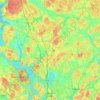
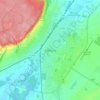
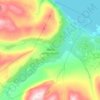
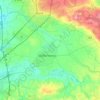
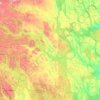
Jönköping topographic map
Click on the map to display elevation.
Make a donation
Jönköping
Jönköping's climate was humid continental (Köppen Dfb) with long, cold winters and short, warm summers during the 1961–1990 period. However, the window between subarctic and oceanic is very small in this marine-influenced climate type, and in recent years the climate has more resembled very cold oceanic. However, figures are slightly skewed due to the weather station being located at the airport which is at an elevation of 228 metres (748 ft), whereas the city centre is at 100 metres (330 ft). This likely renders up to between half a degree to a full degree milder temperatures in the urban centre.
Make a donation
About this map
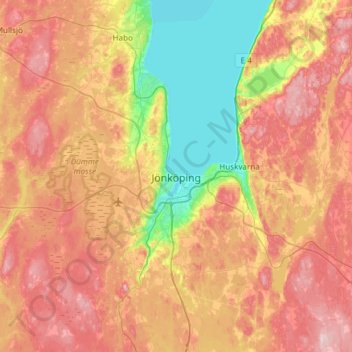
Name: Jönköping topographic map, elevation, terrain.
Location: Jönköping, Jönköpings kommun, 551 86, Sweden (57.62256 14.00572 57.94256 14.32572)
Average elevation: 215 m
Minimum elevation: 86 m
Maximum elevation: 350 m
Make a donation
Other topographic maps
Click on a map to view its topography, its elevation and its terrain.
Make a donation
Make a donation

Make a donation

Make a donation

Make a donation
Ven
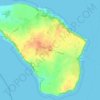
Along the entire coast, the island drops steeply towards the sea where the Öresund meets a rocky beach. This steep coast is called Backafall. Ven's backafall is a nature reserve established in 1990. There are no large forests, but smaller stands of trees occur closest to the coast the slightly higher…
Average elevation: 13 m
Make a donation

Make a donation
Kullaberg
Sweden > Skåne County > Mölle
Kullaberg (Swedish pronunciation: [kɵlaˈbærj]) is a peninsula and nature reserve of land protruding into the Kattegat in Höganäs Municipality near the town of Mölle in southwest Sweden. The site in the province of Skåne is an area of considerable biodiversity supporting a number of rare species and has…
Average elevation: 22 m

Make a donation


Make a donation


Make a donation
Make a donation

Make a donation

Region Norrland
Norrland has a highly variable climate depending on altitude, latitude and distance to water. The southern coastal areas have a humid continental climate, but further north, the subarctic climate is abundant, although it in many areas is very mild for that classification, especially in coastal regions. In the…
Average elevation: 270 m
Make a donation

Region Svealand
Svealand consists of the capital region Mälardalen in the east, Roslagen in the north-east, the former mining district Bergslagen in the center, and Dalarna and Värmland in the west. It includes an extensive archipelago of thousands of small islands in Södermanland and Uppland and has lakeshores on the four…
Average elevation: 236 m


Make a donation


Make a donation


Make a donation
Make a donation
Abisko National Park
Permafrost is common in the national park, though permafrost at lower elevations is disappearing because of global warming and increased snowfall.
Average elevation: 740 m
Make a donation

Sarek
Sarek National Park is the most mountainous region in Sweden and it is the part of the country that mostly resembles an alpine countryside. Within the park are 19 summits higher than 1,900 m (6,200 ft), the most noted being the second highest summit in Sweden after the Kebnekaise – the Sarektjåkkå with a…
Average elevation: 994 m
Make a donation
Make a donation
Make a donation

Make a donation
Province of Hälsingland
The terrain is mostly hilly and rocky, sloping down towards the coast. The highest elevation in the northern part is 530 meters, and 671 meters in the western part. Approximately 85% of the land area is covered with forest, and the timber industry has historically been the main source of income. Apart from…
Average elevation: 182 m

Make a donation

Province of Södermanland
The terrain is flat, with its highest altitude being Skogsbyås at 124 m (407 ft) elevation. The terrain largely consists of water filled hollows covered with woods on the heights.
Average elevation: 23 m

Make a donation

Make a donation