

Make a donation
Bakony topographic map
Click on the map to display elevation.
Make a donation
About this map

Name: Bakony topographic map, elevation, terrain.
Location: Bakony, Transdanubia, Hungary (46.89688 17.26855 47.42810 18.29849)
Average elevation: 218 m
Minimum elevation: 98 m
Maximum elevation: 690 m
Make a donation
Other topographic maps
Click on a map to view its topography, its elevation and its terrain.

Budapest
The wide Danube was always fordable at this point because of a small number of islands in the middle of the river. The city has marked topographical contrasts: Buda is built on the higher river terraces and hills of the western side, while the considerably larger Pest spreads out on a flat and featureless sand…
Average elevation: 153 m
Budapest
The wide Danube was always fordable at this point because of a small number of islands in the middle of the river. The city has marked topographical contrasts: Buda is built on the higher river terraces and hills of the western side, while the considerably larger Pest spreads out on a flat and featureless sand…
Average elevation: 153 m

Make a donation


Budapest
The wide Danube was always fordable at this point because of a small number of islands in the middle of the river. The city has marked topographical contrasts: Buda is built on the higher river terraces and hills of the western side, while the considerably larger Pest spreads out on a flat and featureless sand…
Average elevation: 171 m
Pécs
Pécs is bordered by plains to the south (elevation 120–130 m), while the Mecsek mountains rise up to elevations of 400–600 meters behind the city. Jakab-hill, located in the western Mecsek, is 592 m (1942 ft) tall, Tubes, straight above Pécs, is 612 m (2008 ft) tall, and Misina is 535 m (1755 ft) tall.…
Average elevation: 232 m
Make a donation


Make a donation
Budapest
The wide Danube was always fordable at this point because of a small number of islands in the middle of the river. The city has marked topographical contrasts: Buda is built on the higher river terraces and hills of the western side, while the considerably larger Pest spreads out on a flat and featureless sand…
Average elevation: 171 m

Tisza
The 1800–2500 m high ridge of the Carpathian Mountains create in a semi circle the northern, eastern and southeastern boundary of the Tisza catchment. The western - southwestern reach of the watershed is comparatively low in some places – on its Hungarian and Serbian parts it is almost flat. The area is…
Average elevation: 232 m
Budapest
The wide Danube was always fordable at this point because of a small number of islands in the middle of the river. The city has marked topographical contrasts: Buda is built on the higher river terraces and hills of the western side, while the considerably larger Pest spreads out on a flat and featureless sand…
Average elevation: 153 m
Make a donation


Tisza
The 1800–2500 m high ridge of the Carpathian Mountains create in a semi circle the northern, eastern and southeastern boundary of the Tisza catchment. The western - southwestern reach of the watershed is comparatively low in some places – on its Hungarian and Serbian parts it is almost flat. The area is…
Average elevation: 232 m
Make a donation
Budapest
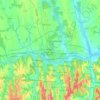
The wide Danube was always fordable at this point because of a small number of islands in the middle of the river. The city has marked topographical contrasts: Buda is built on the higher river terraces and hills of the western side, while the considerably larger Pest spreads out on a flat and featureless sand…
Average elevation: 171 m

Make a donation



Make a donation


Make a donation



Make a donation


Pannonian Basin
Pannonian basin vs Carpathian basin: On the territory of present-day Hungary the ancient Roman Pannonia province was located only on Transdanubian territories, however the Great Hungarian Plain was not part of Pannonia province. This comprises less than 29% of modern Hungary, therefore Hungarian geographers…
Average elevation: 99 m

Make a donation


Make a donation


Make a donation


Make a donation



Miskolc
Hungary > Borsod-Abaúj-Zemplén
The lowest areas are the banks of the river Sajó, with an altitude of 110–120 m (360–390 ft). The area belongs to the Great Plain region and is made up of sedimentary rocks. Between the Avas hill and Diósgyőr lies the hilly area of the Lower Bükk (250–300 m or 820–980 ft) consisting of sandstone,…
Average elevation: 194 m

Make a donation



Make a donation


Make a donation


Make a donation


Make a donation


Make a donation



Make a donation


Make a donation


Make a donation


Make a donation


Make a donation



Make a donation